
Hydraulic Elevator
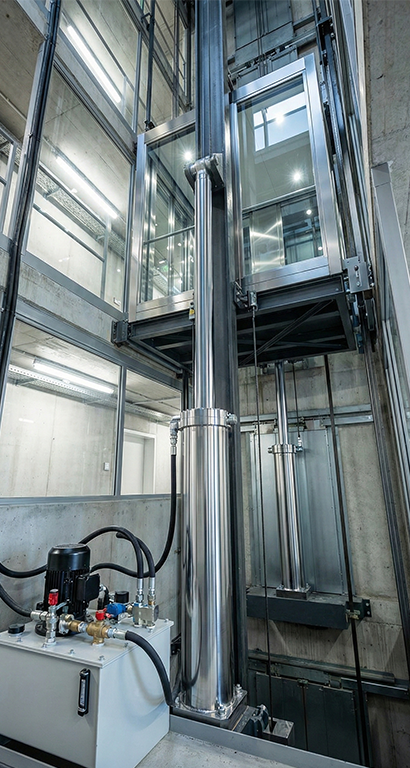
A Solid and Safe Way to Move Up…
Hydraulic elevators are vertical transportation systems that operate with the pressure generated by hydraulic fluid and are generally preferred in low to mid-rise buildings. They are a strong alternative especially in environments where heavy loads need to be transported safely and regularly. They can be used in many areas from commercial buildings to residential projects and offer different advantages depending on their intended use.
History and Development
The history of hydraulic elevators dates back to the first applications of hydraulic principles in the 19th century. Early systems were designed to operate using water or oil pressure. Over time, technological advancements have made these systems safer, more stable, and more efficient. Today’s hydraulic elevators generally operate with oil or water-based hydraulic fluids and are supported by modern safety equipment.
Working Principle
Hydraulic elevators operate through hydraulic cylinders and pump systems. The main components and working logic are as follows:
The operating logic of hydraulic systems is straightforward: The pump pressurizes the fluid and sends it to the cylinders. As the cylinders extend, they push the platform upward. During descent, the fluid is released back, and the platform moves downward in a controlled manner under gravity.
Advantages
Main advantages of hydraulic elevators include:
Disadvantages
However, hydraulic elevators also have some disadvantages:
Areas of Use
Hydraulic elevators are used in various structures and sectors:
Safety Measures and Standards
Safe operation of hydraulic elevators is ensured through standards and regulations:
Energy Efficiency and Environmental Impact
Hydraulic elevators have both advantages and disadvantages in terms of energy consumption and environmental impact:
Conclusion
Hydraulic elevators provide an effective vertical transportation solution in low and mid-rise buildings. They stand out with their high load capacity, relatively quiet operation, and cost-effectiveness. However, factors such as energy consumption and hydraulic fluid-related risks should also be considered.
Why ? Case Elevator Case Elevator
Why Case Elevator? Unshakable Trust: Every rail, every button, and every panel we supply fully complies with international safety standards. Aesthetics and Technology: We combine the aesthetic touch required by modern architecture with the most advanced control systems. Solution-Oriented Approach: Not only before the sale, but also in our after-sales technical support processes, we are the closest solution partner to our customers. On-Time Delivery: With our strong stock structure, we ensure fast and uninterrupted shipment so that your projects are not delayed. Our Vision; With the strength we take from Konya, to become the first brand that comes to mind when "quality" is mentioned in elevator projects across Turkey. Our Mission; With the awareness that we carry human lives, to work with a "zero error" principle from the smallest screw to the largest cabin.










You Can Contact Us by Filling Out the Form
If you would like us to call you, please add your contact information to the form